TAN: Rats!
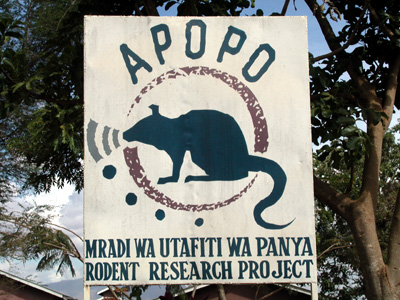
We were up at the crack of day once again to make our 7:00 a.m. appointment at the Apopo research center.
Apopo is a scent detection project funded in part by the Netherlands government and the EU. The research involves giant pouched rats that are indigenous to most of Africa. They are primarily being trained to detect explosives used in land mines with the goal of being able to provide and effective and inexpensive was to clear large areas of mines. Some of the rats have been working in Mozambique. The initial tests have been very positive with a 100% find rate.
As we arrived, the staff were bringing out cage after cage of giant rats ready to go out into the field for their morning training. The outdoor training is only done from 7-9 a.m. After that it becomes too hot. The rats were loaded into a truck with the staff piled into a dala dala. We followed them both down to the training field.
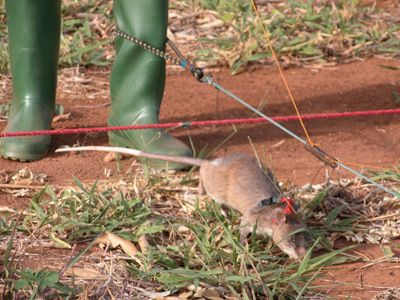
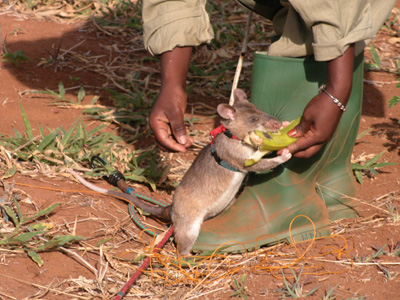
The rats are guided across a 5 meter wide section of ground. When they smell explosive they start to scratch at the ground upon which time a handler depresses a clicker and the rat comes over for a food reward.
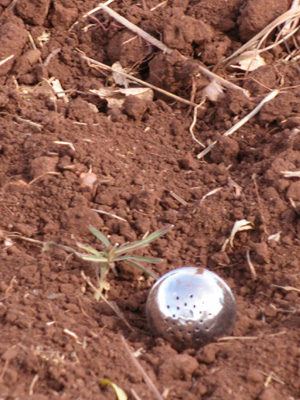
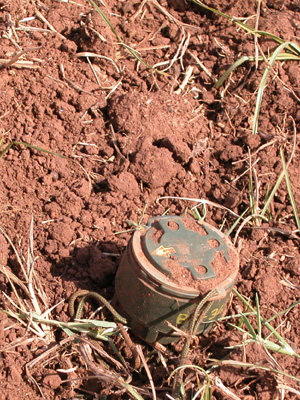
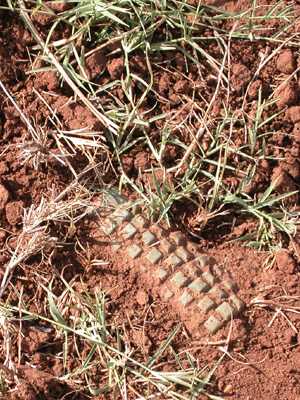
The quarry, a tea egg, a M14 mine and a Yugoslavian bouncing mine designed to detonate at head height.
We filmed and shot the rats in various stages of their training, moving slowly from relatively simple courses with explosives in tea eggs laid on the ground surface to courses with buried land mines. The land mines themselves are all real but have had the fuses removed.
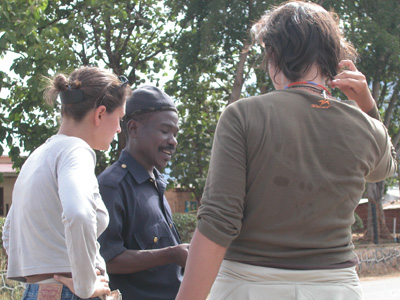
The guard at the main gate took offense at us filming the University grounds and demanded to see our papers. After some calls to the Apopo staff and some other University staff he decided that it was alright for us to be filming.
We followed the rats and staff back to the Apopo compound. We were given a tour of the breeding cages and the first stages of the training. The rats begin their training by being conditioned with a clicker and then with the clicker and a food reward. They are then introduced to a number of scents and have to pick out the scent of explosive to get a food reward. The number of scents becomes greater and the environment more open as the training progresses.
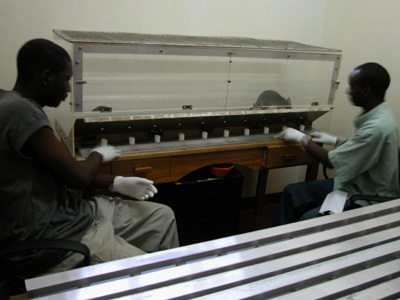
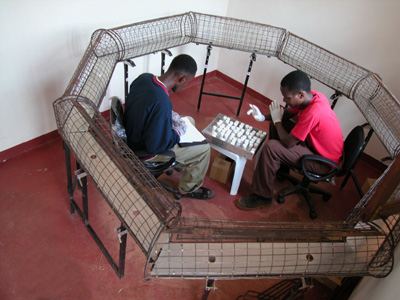
A training apparatus with ten scent jars. The octogon.
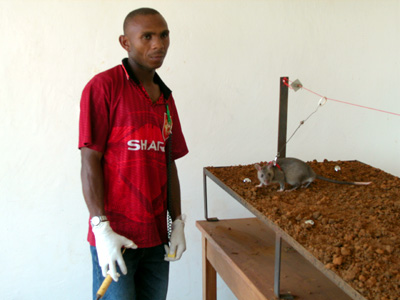
The sandbox, the first outdoor training.
After we had gotten our fill of looking around the facility, we headed over to talk with Christof, the Assistant Director of the project. He was marking up some large sheets of metal, but had agreed to talk to us. He gave a brief background of the project and talked about the different programs they are working on. The rats are divided into two groups, field rats and REST rats. The field rats are the ones we had seen in the morning while the REST rats are used to test samples collected in the field with vacuum devices with special filters attached. The REST rats are used to narrow down large sections of area to determine which parts are potentially contaminated.
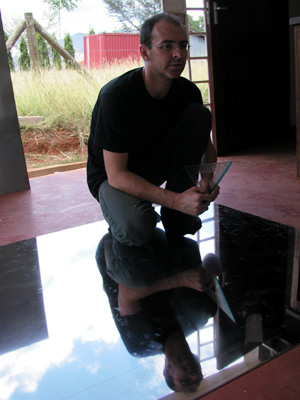
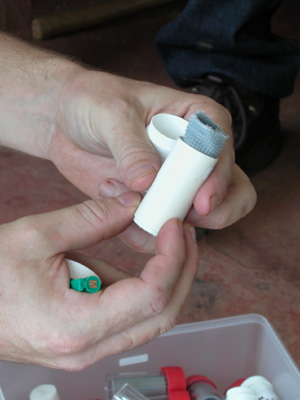
Christof, the Assistant Director for the Apopo project. One of the filters used to collect scent samples.
Another interesting avenue the rats are being used for is the detection of Tuberculosis. The rats have about the same success rate (60-70%) as the the machines currently in use, but are able to process the samples 200 times faster.
We conducted an on camera interview with Christof before deciding we should start thinking about heading back to Dar es Salaam. As we were wrapping things up, we told him what we had been working on. His interest was peaked at the mention of the DVD for the Foxes. He was curious to know if we had ever been to “Crazy Lagoon.” Our ears perked up at this point and we all expected a good story to go along with the appellation of “Crazy,” but he had just gotten the name mixed up.
We stopped at a water tower on the way off of the University campus to get some establishing shots of the Apopo compound. We waved goodbye to the Security Guard for what we thought was the last time and headed out in search of some lunch. The first two places only had chips and at the second, someone suggested that we try the Salani Club, back toward the University. It turned out to be on the campus, necessitating a drive by the Security Guard. The restaurant itself was called the “Austrian Kitchen.” The interior was festooned with pictures of Salzburg in the winter with lots of snow. The wait staff were all decked out in red and white uniforms with red hats with big black pom-poms on top. The food was excellent, but slow in coming.
After lunch we departed Morogoro for real. A front of black clouds could be seen to the north-east. I thought they looked like they were moving away from us, but I was sorely mistaken. We had a spattering of huge drops at first and then the deluge began in earnest. Visibility was cut to almost nothing. Jerome did an excellent job of keeping us on the road, but we were all a little nervous. We were happy to be out of the storm twenty minutes later.
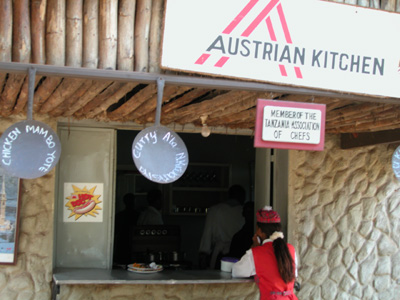
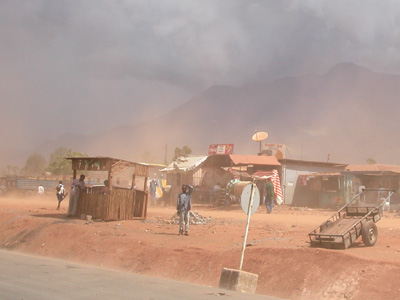
The ever-popular Austrian Kitchen, a member of the Tanzanian Association of Chefs.The wind was terrible coming out of Morogoro.
The rest of the trip back was smooth. We made it to Micocheni late in the afternoon. We paid Jerome the extra bit for our detour and he was off. We were all happy to freshen up with a real shower.