TAN: Kilwa Kisiwani
Had a very restless night. The new watch I had gotten before leaving has been giving me fits. It has begun resetting itself with increasing frequency. It has been New Years at least six times so far on this trip. Fortunately, this morning was not a New Years morning, but I was up ahead of the 4:15 a.m. alarm anyway.
Got myself together and out the door to go and make sure Chantal and Sandrine were on track. I was stymied by the main building being locked. I circled toward the back of the building looking for a way to get by girls’ window but found no access. I am sure the gentleman who was washing cars at 4:30 a.m. was rather confused by what I was doing. I eventually hopped over a wall to find that they were indeed awake, but felt they were locked in. As I came back around, the front door was open and Chantal was by the bungalow looking for me. As we all met up, it started to rain. The rain lasted 10 minutes, but didn’t bode well for our trip to Kilwa Kisiwani. Swale and Saidi turned up a bit later and we headed off to the harbor.
A dhow awaited us at the harbor. We scampered aboard and enjoyed the half hour trip to the island. The sky had started to clear and we could see areas of rain moving away from us. As we drew near the shore, we noticed a rainbow over the ruins of a fortress. After our gear was unloaded, Chantal and I headed off to document the fortress. As we were returning to the rest of the group, a local official approached. He had Pierre on a walkie-talkie and a long conversation in Swahili and French ensued. The upshot was that the official did not think our papers were in order and we would consequently not be allowed to film or take pictures. After further negotiations and some linguistic finagling we were allowed to shoot.
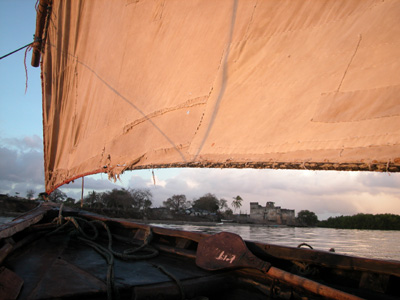
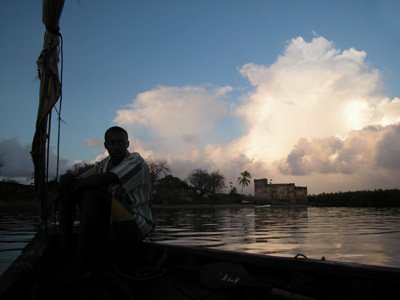
Views of the fort from our dhow.
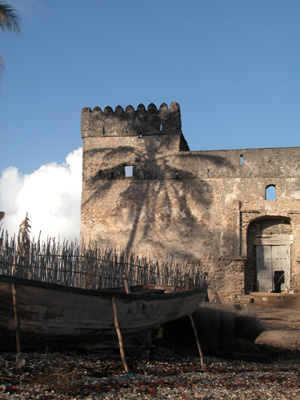
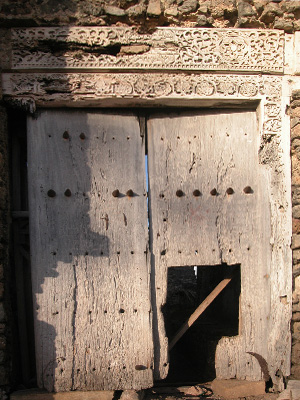
The fort at kilwa Kisiwani.
The rest of the morning was spent shooting the Great Mosque and Makutani, a palace for the sultans of Kilwa. The ruins are the oldest known Swahili settlement in East Africa. They initially date from the 13th century, with additions up to the 18th century. Eddy, the French stone carver in change of the actual restoration was on hand to show us around a bit before Pierre arrived.
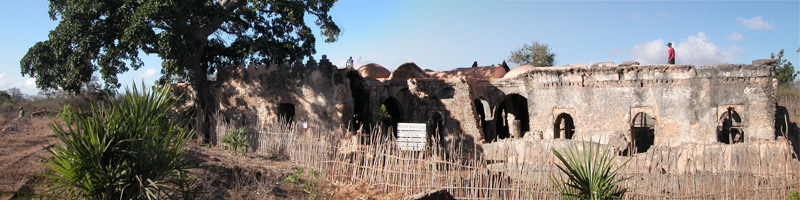
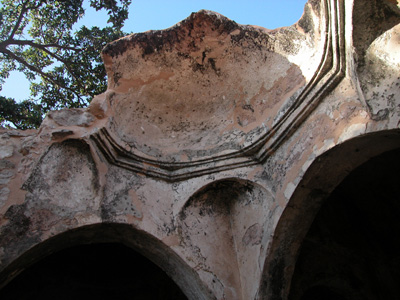
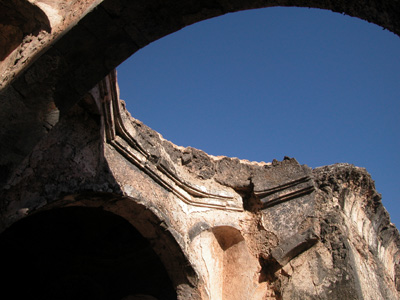
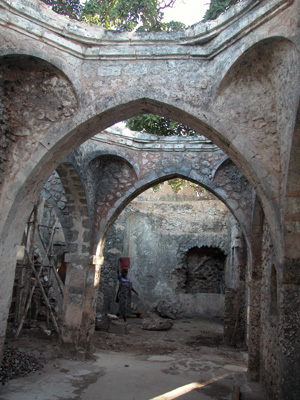
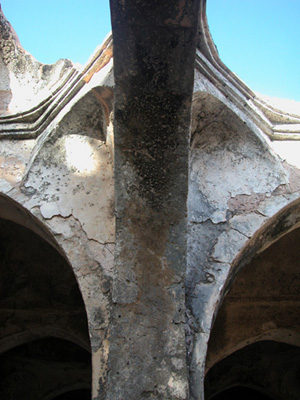
Views of the Great Mosque at Kilwa Kisiwani.
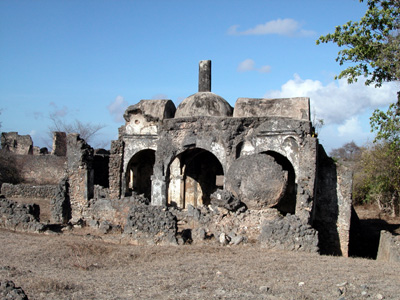
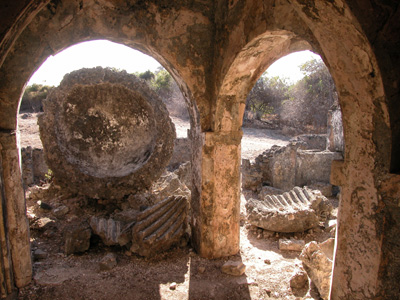
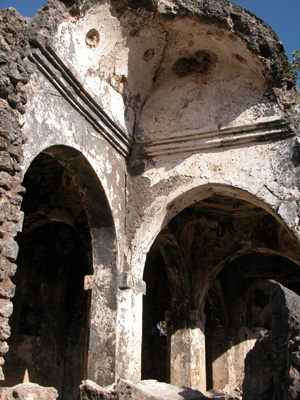
Views of the Small Mosque used by the Sultan and his family.
After a bit of surveying work was completed, Pierre led us on a 20-minute hike under the scorching noonday sun to Husini Kubwa. The ruins here were of a massive palace dating from the 12th century and covering more than a hectare. The palace was constructed to take advantage of the bluff that it was located on and laid out to impress visitors with its enormity. Visitors entered to the structure via a grand staircase that put them on the roof of the rooms lining a huge courtyard that functioned as a marketplace. The visitors continued on the rooftop all the way around the courtyard before descending into the marketplace via another grand staircase just before the initial one. The sultan’s quarters were right on the edge of the bluff, affording ample sea breeze and a panorama of a large swath of the island and long portion of the mainland. We descended the marrow stair would have brought the sultan to the shore and hiked back to the Great Mosque. We stopped along the way to have a cup of delicious tea spiked with ginger. It was the best tea I have tasted in a long, long time.
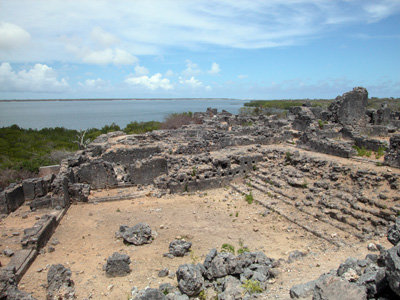
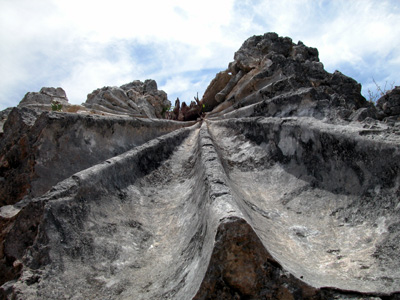
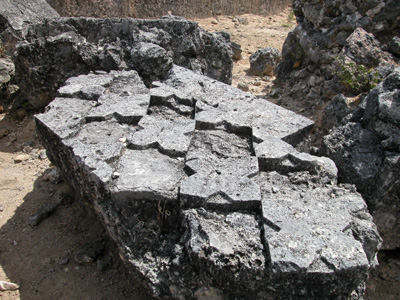
Looking out over Hisini Kubwa and some detail shots including a collapsed conical ceiling.
Pierre had to return to the mainland, so the rest of the afternoon was spent filming the Eddy interacting with the workers. Eddy is very well liked by the crew. When asked why she was keen on learning stone carving, one lady replied that she liked working with Eddy and that was enough reason. We headed over to Eddy’s house for a spot of refreshment before going into the village to elicit the opinions of some of the locals about the project. The verdict was favorable and the two folks we talked to were both pleased with the project and thought it was beneficial. The second gentleman we talked to was the head of an Islamic school. We were fortunate enough to come across the school as the students were reciting a devotional song. The song was amazing, with fantastic toned drums and the girls and boys singing different parts.
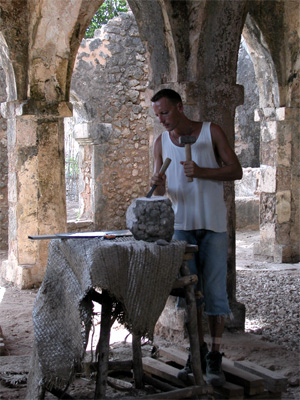
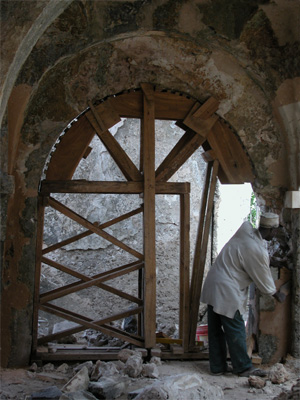
Eddy was working as a graphic designer before pursuing a career as a stone carver. Repairing an archway.
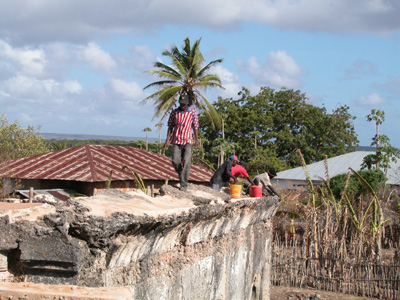
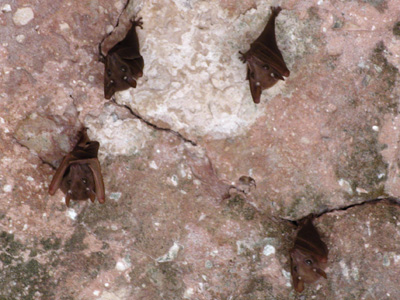
Stabilizing the tops of the walls. A colony of bats enjoy the domed ceilings.
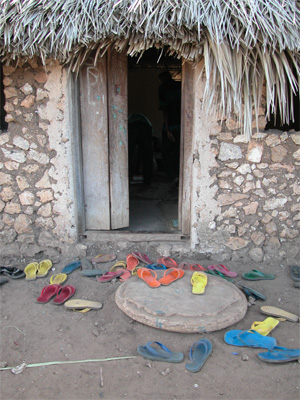
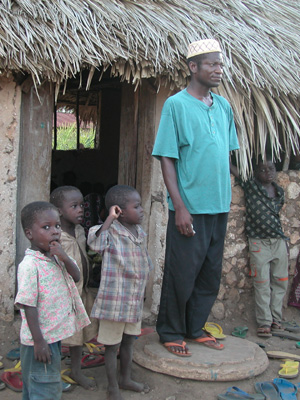
The little Islamic school on Kilwa Kisiwani.
We wound our way back to the Great Mosque as the sun was setting. Our dhow was waiting in the harbor to take us back. The trip to the mainland was a little longer as the wind was not as consistent as it had been in the morning.
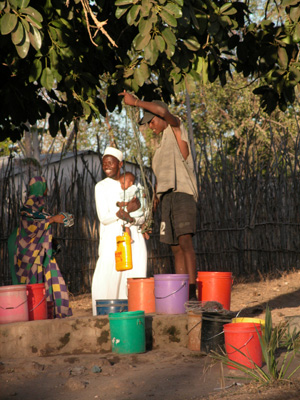
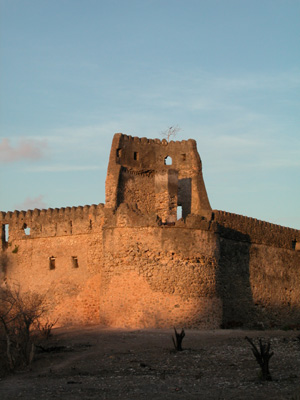
Water can be drawn from the wells on Kilwa Kisiwani only when the tide is in. The fort in the waning light.
We headed over to join Pierre at the Kilwa Lodge for what was billed as a fancy meal. We had a round of drinks and ogled over a 68Kg Tuna that one of the staff had caught. The dinner was not that exciting and I would have preferred a $0.30 helping of rice and beans. Sandrine was tuckered out after dinner and went to sleep in the truck as we wrapped up our conversations. Finally got to bed around 10 p.m.